
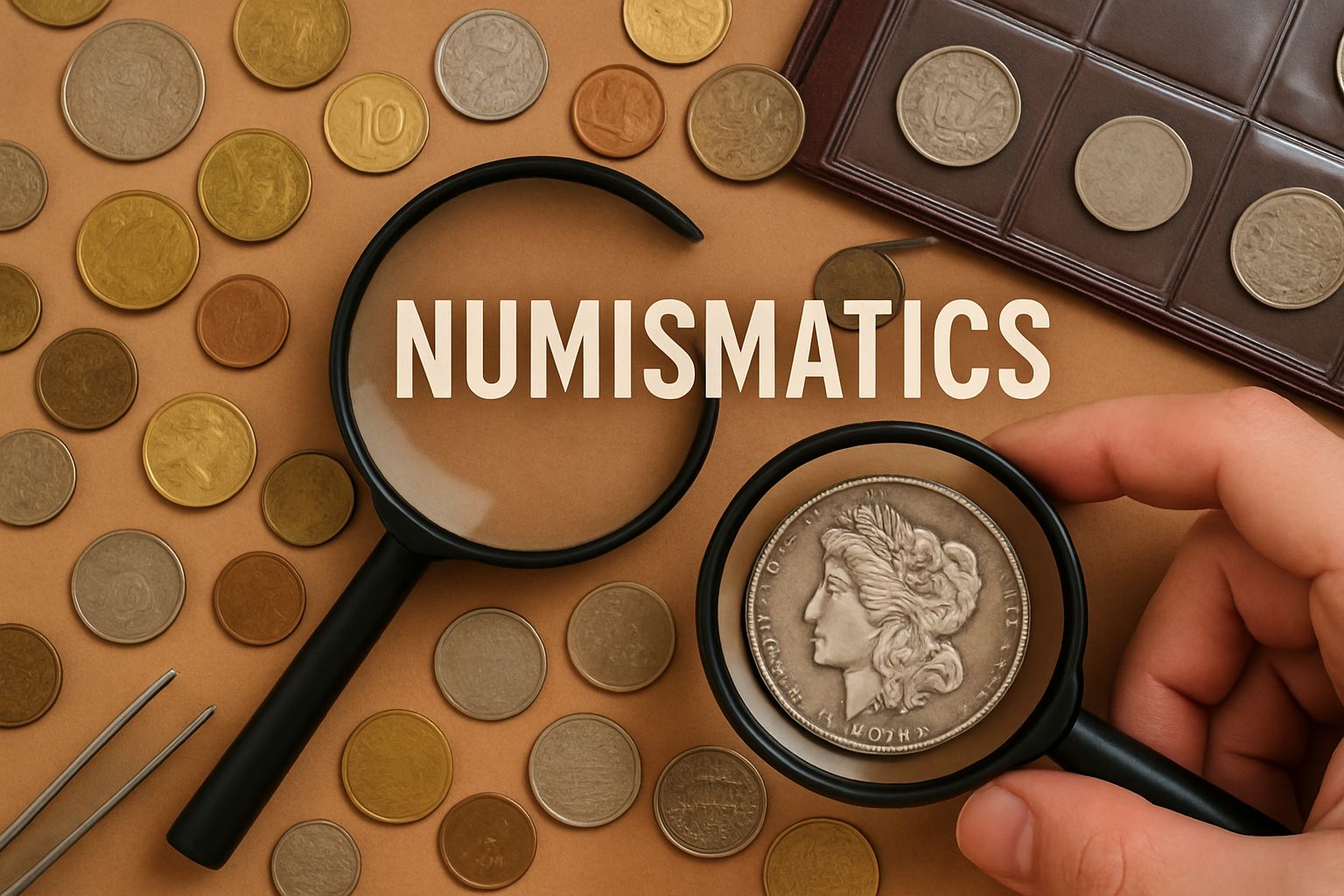
- Roman coins are one of the most accessible and rewarding areas of ancient collecting — authentic examples can be found for under $50, yet masterpieces from Julius Caesar or Nero routinely fetch tens of thousands at auction.
- Every Roman coin has two sides that tell different stories: the obverse reveals who held power, while the reverse unlocks a visual encyclopedia of Roman religion, military victory, and political propaganda.
- The sestertius is widely considered Rome’s most visually spectacular coin — larger than a U.S. half dollar and struck in rich orichalcum bronze, the finest examples rival any ancient artwork in existence.
- Knowing how to read Latin abbreviations on the obverse and decode reverse symbols dramatically increases your ability to identify, authenticate, and value any Roman coin you encounter.
- Building a collection around the Twelve Caesars is one of the most historically satisfying themes in all of numismatics — and more achievable than most beginners realize.
You can hold 2,000 years of history in the palm of your hand for less than the cost of a dinner out.
Roman coins are among the most collected ancient artifacts in the world, and for good reason. They are simultaneously works of art, political documents, historical records, and tangible connections to one of history’s greatest civilizations. Whether you are just discovering ancient numismatics or deepening a lifelong passion, understanding Roman coin designs transforms every coin from a curiosity into a conversation with the ancient world. For collectors looking to explore this space further, Roma Numismatics is one of the leading authorities in ancient coin auctions and research, offering access to verified examples across every era of Roman coinage.
Roman Coins Are More Accessible Than You Think
The idea that ancient Roman coins are locked away in museum vaults or reserved for wealthy collectors is one of the most persistent myths in the hobby. In reality, the Roman Empire produced coins on an almost industrial scale for over five centuries, which means genuine examples survive in quantities that keep entry-level prices surprisingly reasonable.
Why Roman Coins Belong in Every Serious Collection
Unlike nearly any other ancient artifact, Roman coins were legally excavated, documented, and traded for centuries before modern heritage laws existed. This creates a robust, legitimate market with deep historical records. A coin of Emperor Claudius or Vespasian is not a rarefied relic — it is an object that was mass-produced, circulated through markets from Britain to Mesopotamia, and has survived because Romans made things to last. For more information on collecting these fascinating artifacts, check out this Ancient Roman Coin Guide.
What makes Roman coins truly irreplaceable in a collection is their unmatched combination of historical specificity and artistic ambition. Each coin was issued at a precise moment in history, tied to a named ruler, and designed to communicate something deliberate to the people who used it. For those interested in delving deeper into this fascinating subject, this Ancient Roman Coin Guide provides an excellent overview. No other collectible from antiquity gives you that level of layered meaning in a single object.
There is also extraordinary range available to collectors at every level. A worn bronze coin of a lesser-known third-century emperor might cost $15. A well-struck silver denarius of Marcus Aurelius in fine condition typically sells for $150–$400. And at the pinnacle, a aureus of Julius Caesar in exceptional condition can exceed $500,000 at major auction houses. The ladder is long, and every rung is worth climbing.
- Bronze AE coins (third-century emperors): $10–$75 for circulated examples
- Silver denarii (common emperors, Republic era): $50–$300 depending on condition
- Silver denarii (Julio-Claudian dynasty): $200–$2,000+ for portrait coins
- Gold aurei (any emperor): $3,000–$500,000+ based on rarity and strike quality
- Sestertii in high grade: $500–$25,000 for the finest examples
The Price Range That Makes Roman Coins Collectible for All Budgets
The democratization of Roman coin collecting accelerated significantly with the rise of reputable online auction platforms. Today, a collector in any part of the world can bid on a genuine denarius of Septimius Severus struck at the Rome mint in 200 A.D. That kind of access simply did not exist a generation ago.
What matters most when starting out is not spending the most money — it is spending wisely. A well-centered, clearly struck coin of a less famous emperor will always outperform a damaged coin of Caesar in terms of both aesthetic enjoyment and long-term value retention. Condition and artistry drive this market far more than name recognition alone. For those interested in diversifying their investments, exploring self-directed IRA investment in rare gold coins can be a wise choice.
Collector’s Rule of Thumb: “Buy the best example of a type you can afford rather than the most famous type in poor condition. A Fine-grade sestertius of Antoninus Pius with a full portrait will bring more long-term satisfaction — and better resale value — than a nearly illegible denarius of Julius Caesar.”
The Obverse: Portraits of Power
Flip any Roman coin over and the first thing you see is almost always a face. That face is not decorative — it is the most concentrated statement of political authority the Roman world knew how to make.
The obverse portrait was the Roman Empire’s primary mass-communication tool. Before newspapers, before broadcasting, before any form of public media as we understand it, the coin portrait was how an emperor announced his existence to every corner of a territory stretching from Scotland to Syria. When a new emperor seized power, one of his first acts was always to strike new coins bearing his own likeness.
How Emperor Portraits Were Used as Political Tools
Roman coin portraits were not casual likenesses. They were carefully curated images designed to project specific qualities — military strength, divine favor, philosophical wisdom, or dynastic legitimacy. Augustus, for example, consistently chose to appear youthful and idealized on his coinage even as he aged, linking himself visually to the Classical Greek tradition of heroic portraiture. Nero’s portraits evolved dramatically over his reign, shifting from a boyish, clean-cut image in his early years to the heavy-necked, elaborate-coiffed likeness of his later rule — a visual biography struck in silver. For more insights on ancient coinage, you can explore this Ancient Roman Coin Guide.
The Most Sought-After Emperor Portraits in Coin History
Certain emperor portraits have achieved near-legendary status among collectors, and demand for them has remained consistently strong across decades of auction results. For those interested in expanding their collection, exploring investment in rare gold coins can be a rewarding endeavor.
Julius Caesar holds the distinction of being among the first living Romans to appear on a coin — a revolutionary act in a Republic that had long reserved coin portraits for gods and deceased ancestors. His portrait denarii, struck in 44 B.C. in the final weeks before his assassination, are among the most historically charged objects in all of numismatics. Cleopatra’s portrait coins, particularly those issued jointly with Mark Antony, are similarly electrifying — they represent one of the ancient world’s most dramatic political alliances rendered in silver.
How to Read the Emperor’s Name on a Roman Coin
The emperor’s name runs around the periphery of the obverse, almost always abbreviated in Latin. Once you learn the standard abbreviations, identification becomes far more intuitive. IMP stands for Imperator (commander), CAES for Caesar, AVG for Augustus, and TR P for Tribunicia Potestas — the tribunician power, which was renewed annually and can actually help date a coin to a specific year of a reign.
The Reverse: Where the Real Storytelling Happens
If the obverse tells you who is in charge, the reverse tells you everything they wanted you to believe about their reign.
Gods and Goddesses That Appear Most Frequently on Roman Coins
The Roman pantheon was enormous, and coin reverses served as a rotating gallery of divine patronage. An emperor who featured Jupiter Optimus Maximus on his coins was claiming the favor of Rome’s supreme deity. One who emphasized Mars was presenting himself as a military leader blessed by the god of war. The choice of deity was never arbitrary — it was a theological and political statement minted in the millions.
Some deities appear with striking frequency across centuries of Roman coinage. Roma, the personified goddess of the city itself, appears on coins from the earliest Republic through the late Empire. Fortuna — goddess of luck and prosperity — was a perennial favorite, particularly among emperors who needed to reassure a nervous population. Juno, Minerva, Venus, Mercury, and Hercules all appear regularly, each carrying specific symbolic weight that Roman citizens would have recognized immediately.
What makes this particularly fascinating for collectors is that the same deity could be depicted quite differently depending on the mint, the era, and the engraver. A Minerva on a coin of Domitian looks nothing like a Minerva on a coin of Gallienus struck 180 years later. Tracking these variations across your collection becomes its own deeply rewarding area of study.
| Deity | Symbolism | Common Attributes Shown |
|---|---|---|
| Jupiter | Supreme authority, divine favor | Thunderbolt, eagle, scepter |
| Mars | Military power, war | Helmet, spear, shield |
| Minerva | Wisdom, crafts, strategy | Owl, aegis, spear |
| Fortuna | Luck, prosperity, fate | Cornucopia, rudder, wheel |
| Roma | The eternal city, Roman identity | Helmet, shield, Victory figure |
| Venus | Love, fertility, dynastic legitimacy | Apple, dove, draped figure |
Victory, Eagles, and Wreaths: What These Symbols Mean
Victoria — the winged goddess of Victory — is arguably the single most common reverse figure in all of Roman Imperial coinage. She appears striding, flying, or standing, typically holding a wreath and a palm branch. Her presence on a coin announced military success, whether a genuine battlefield triumph or simply an emperor’s wish to project one. The eagle, sacred to Jupiter and the symbol of the Roman legions, served a similar function. A reverse showing Jupiter’s eagle clutching a thunderbolt was a shorthand declaration that the gods themselves endorsed Roman military supremacy.
Battle Commemorations and Religious Festivals on Coin Reverses
Some of the most historically specific coins ever struck are those that commemorate actual events. Vespasian’s famous IVDAEA CAPTA sestertii, issued after the destruction of Jerusalem in 70 A.D., show a mourning Jewish captive beneath a Roman trophy — an extraordinarily blunt piece of victory propaganda. Trajan’s coins celebrating the conquest of Dacia (DAC CAP) follow the same tradition, turning military campaigns into permanent bronze and silver records.
Religious festival coins are equally compelling. Games held in honor of specific gods — the Secular Games, the Capitoline Games — were commemorated on coins that functioned almost like official event programs in metal. Collecting around these themes gives you a coin collection that doubles as a calendar of the Roman religious and military year.
The Greatest Roman Coin Designs by Era
Roman coinage spans nearly seven centuries of continuous production, and the artistic quality, historical significance, and collector demand shift dramatically depending on which era you focus on. Understanding these periods does not just make you a better collector — it fundamentally changes how you look at every coin you encounter.
Julio-Claudian Dynasty: Julius Caesar, Augustus, Tiberius, Caligula, Claudius, and Nero
The Julio-Claudian dynasty produced some of the most coveted coins in all of ancient numismatics. These are the names that non-collectors recognize, and that recognition drives extraordinary demand. A silver denarius of Augustus in Very Fine condition typically commands $300–$800 at auction, while a gold aureus of the same emperor in comparable grade can easily exceed $30,000. What makes these coins so compelling beyond their famous names is the sheer quality of their portraiture — the engravers of this period were working at a level of miniature artistry that would not be surpassed in the ancient world.
Nero’s coins deserve special attention. His reign produced some of the finest silver denarii ever struck, with a richly detailed portrait style and reverses featuring Roma, Jupiter, and elaborate temple architecture. The famous ROMA reverse type showing the goddess seated on seven hills is one of the most striking designs of the entire Imperial period. Despite Nero’s historical reputation, his coins are universally admired by serious collectors, and prices have remained strong for decades.
The Five Good Emperors: Remarkable Artistry at More Affordable Prices
The reigns of Nerva, Trajan, Hadrian, Antoninus Pius, and Marcus Aurelius — collectively known as the Five Good Emperors — represent both the political and artistic peak of the Roman Empire. Coins from this period are characterized by exceptional strike quality, beautifully rendered portraits, and reverse types of remarkable variety and sophistication. Hadrian alone issued coins depicting his travels to virtually every province in the Empire, creating a series of ADVENTVS and provincial coins that amount to a visual atlas of the Roman world.
For collectors on a considered budget, this era represents perhaps the finest value in all of Roman numismatics. A well-struck denarius of Marcus Aurelius or Antoninus Pius in Fine to Very Fine condition can often be acquired for $100–$250 — a remarkable price for a coin of such historical and artistic caliber struck nearly 1,900 years ago.
Commodus to Geta: Silver and Bronze Masterpieces
The Severan dynasty and the chaotic period preceding it produced some of the most psychologically fascinating portrait coins in Roman history. Commodus, who famously identified himself with Hercules, issued coins showing himself wearing the Nemean lion’s scalp — one of the most audacious self-portraits in ancient coinage. These coins are not merely collectibles; they are primary historical documents of a ruler’s megalomania rendered in silver.
The Severan period that followed brought its own remarkable designs. Septimius Severus, Caracalla, Julia Domna, and Geta all produced distinctive and collectible coins. Julia Domna’s portrait denarii are particularly admired for their elegant, wave-coiffed portraiture — some of the most beautifully executed female portraits in ancient numismatics. Caracalla’s introduction of the antoninianus in 215 A.D., a double denarius identified by the radiate crown on the emperor’s portrait, created an entirely new coin type that collectors now pursue across dozens of rulers.
The Largest and Most Visually Stunning Roman Coins
Size matters in ancient coinage, not for reasons of vanity, but because a larger flan gave ancient engravers more canvas to work with. The largest Roman coins are frequently the most artistically accomplished, and they command premium prices that reflect both their visual impact and their relative scarcity. For those interested in similar collectibles, exploring high-end precious metal collectibles can provide further insight into the allure and value of such items.
When you hold a large-denomination Roman bronze coin in your hand for the first time, the experience is genuinely arresting. These are substantial, weighty objects — the largest sestertii weigh 25–28 grams and measure 32–38mm in diameter — and the finest examples carry portrait and reverse work of extraordinary depth and detail. No photograph fully captures what it feels like to examine a high-grade sestertius of Hadrian under a loupe.
The Sestertius: Rome’s Most Impressive Bronze Coin
The sestertius is widely regarded as the showpiece of Roman Imperial coinage. Struck in orichalcum — a golden-toned brass alloy prized for its warm color and ability to take a fine strike — the sestertius offered engravers the largest working surface of any standard Roman coin. The finest examples, particularly those from the reigns of Nero, Trajan, Hadrian, and Antoninus Pius, display portraiture and reverse compositions that genuinely rival the miniature sculpture of the period. For those interested in investing in rare coins, consider exploring self-directed IRA investment in rare gold coins.
A sestertius of Nero showing the ANNONA AVGVSTI reverse — depicting Annona, the goddess of grain supply, facing Ceres with a ship’s prow visible in the background — is considered one of the great artistic achievements of ancient coinage. These coins were struck with extraordinary care, and when found in high grade with original brown or green patina, they are objects of remarkable beauty. Expect to pay $500–$3,000 for a collectible example, with the finest specimens exceeding $50,000 at major auction.
The Dekadrachm: The Pinnacle of Ancient Coin Design
While technically a Greek rather than Roman Imperial coin, the dekadrachm — a ten-drachm silver piece produced in cities like Syracuse and Carthage — represents the absolute summit of ancient die-cutting artistry, and serious Roman collectors frequently extend their focus to include these pieces. The Syracusan dekadrachm signed by engravers Kimon and Euainetos, struck around 400 B.C., features a quadriga and a portrait of the nymph Arethusa surrounded by dolphins that has never been surpassed in miniature metalwork. These are museum-grade objects that occasionally come to market, and when they do, they command six-figure prices without hesitation.
What Separates a Valuable Roman Coin From an Ordinary One
Two coins of the same emperor, same type, and same denomination can differ in value by a factor of ten or more. Understanding exactly what drives that difference is the difference between a collector who buys wisely and one who overpays consistently.
- Strike quality: How completely the design was transferred from die to flan — weak strikes leave flat, indistinct details
- Centering: Whether the design falls fully within the coin’s boundaries, with no legends or portrait elements cut off
- Surface preservation: The absence of tooling, cleaning, smoothing, or artificial patination
- Patina: Original, undisturbed patina (particularly on bronze) dramatically enhances both beauty and value
- Rarity of type: Some reverse types were struck in far smaller quantities than others, even within the same reign
- Artistic quality of the specific dies used: Different engravers produced dies of wildly varying quality, even for identical coin types
- Provenance: A documented auction history adds authenticity confidence and can meaningfully increase value
The single most common mistake new collectors make is prioritizing the emperor’s name over everything else. A heavily worn, off-center denarius of Julius Caesar is historically interesting but aesthetically disappointing and often overpriced relative to what a sharp, well-centered denarius of a less famous emperor at the same price point could offer. For those interested in diversifying their collection, exploring rare gold coins might be a worthwhile consideration.
Experienced collectors learn to think in terms of the coin as an object first and the name second. The goal is always to find the best possible example of any given type — a coin that was struck from fresh dies, centered perfectly on a well-prepared flan, and has survived with its surfaces intact. Those coins, regardless of whose portrait they carry, are the ones that hold value, attract admiration, and become the centerpieces of serious collections.
Centering and Strike Quality
A well-centered coin shows the complete portrait, all legend text, and the full reverse composition without any element running off the edge of the flan. This sounds basic, but the realities of ancient hand-striking meant that many coins — perhaps the majority of surviving examples — are at least partially off-center. A fully centered coin with a sharp strike from fresh dies is genuinely rare and commands a significant premium that is entirely justified. When examining any Roman coin for purchase, the first thing to check is whether you can see the complete portrait and whether the legends run around the full periphery without being cut off.
Artistic Quality and the Role of Ancient Engravers
The men who cut Roman coin dies were among the most skilled artists of antiquity, working in hardened steel at a scale that required extraordinary precision and a steady hand. The finest engravers — some of whom signed their work on Greek coins, though Roman die-cutters rarely did — could render a convincing portrait with expressive eyes, realistic hair texture, and subtle modeling of the facial structure in a space smaller than a thumbnail. The difference between a coin struck from a master engraver’s dies and one produced from a provincial workshop’s cruder work is immediately visible and dramatically affects desirability. For those interested in investing in rare gold coins, understanding the artistry behind these engravings is crucial.
Condition, Preservation, and Why It Matters to Collectors
Roman coins are graded on a scale that runs from Poor (barely identifiable) through Fair, About Good, Good, Very Good, Fine, Very Fine, Extremely Fine, and Mint State. The jump in value between Fine and Very Fine, or between Very Fine and Extremely Fine, is not linear — it is exponential. An Extremely Fine sestertius of Trajan might be worth eight to ten times as much as an identical type in Fine condition. Preservation is not just about aesthetics; it is the single most powerful driver of ancient coin value after rarity.
How to Start Collecting Roman Coins Today
The best time to start a Roman coin collection was twenty years ago. The second best time is right now. Prices for quality examples have risen steadily over the past two decades as awareness of ancient numismatics has grown globally, which means coins acquired thoughtfully today are likely to appreciate in both monetary and personal value over time.
The four principles below will serve any collector well, whether you are spending $100 or $100,000. Following them consistently from the beginning will save you from the expensive education that comes from buying the wrong coins at the wrong prices.
1. Start With the Twelve Caesars as Your Foundation
The Twelve Caesars — Julius Caesar, Augustus, Tiberius, Caligula, Claudius, Nero, Galba, Otho, Vitellius, Vespasian, Titus, and Domitian — represent the most historically compelling collecting theme in all of ancient numismatics. Building a complete set of portrait coins for each of these rulers is a goal that generations of collectors have pursued, and the pursuit itself is half the pleasure. Some, like Augustus and Vespasian, are relatively accessible. Others, like Otho, who reigned for just three months in 69 A.D., will test your patience, your budget, and your knowledge of the market in equal measure.
2. Build a Theme Around Gods, Families, or Dynasties
Once you have a foundation, thematic collecting opens up an almost limitless range of directions. A collection focused entirely on reverse depictions of Hercules across different reigns produces a fascinating visual study of how Roman artistic style evolved over three centuries. A dynastic collection tracing the Severan family — Septimius Severus, Julia Domna, Caracalla, Geta, and Plautilla — tells one of the Roman Empire’s most dramatic family stories entirely through coins. Others collect by mint city, tracking how the same emperor’s portrait was interpreted differently by engravers in Rome, Antioch, Alexandria, and Lugdunum. The framework you choose shapes not just what you buy, but how deeply you engage with Roman history as a whole.
3. Use Reference Books Like Roman Imperial Coins by Spink to Authenticate
Essential Reference Library for Roman Coin Collectors:
Roman Imperial Coinage (RIC) — Spink & Son, 10 volumes — The definitive scholarly catalogue for Imperial coins, organized by emperor and mint. Every serious collector needs access to this series.
Roman Coins and Their Values by David Sear — The most practical single-volume reference for identification and approximate current market values. Ideal for beginners and intermediate collectors.
Online Coins of the Roman Empire (OCRE) — A free digital database jointly maintained by the American Numismatic Society and Oxford University, cataloguing tens of thousands of coin types with images.
Roman Republican Coinage by Michael Crawford — The standard reference for Republic-era coins, essential if your collecting interest extends before the Imperial period.
Authentication is the single most critical skill a Roman coin collector can develop, and it begins with familiarity. The more genuine coins you examine — in hand, in auction catalogues, and in database images — the more quickly your eye learns to recognize the subtle characteristics of authentic ancient metalwork: the way genuine wear softens high points gradually, how ancient bronze patina penetrates the metal rather than sitting on the surface, and the specific tool marks left by ancient engravers that modern forgers consistently fail to replicate convincingly.
Modern forgeries range from crude tourist-market copies that fool no one with basic knowledge to sophisticated deceptions that have passed through reputable auction houses. The best protection is buying from established dealers with written guarantees of authenticity, cross-referencing every purchase against RIC or OCRE, and never purchasing a coin whose price seems dramatically below market value for its stated type and condition. If a coin seems too good to be true at the price being asked, trust that instinct. For those interested in alternative investments, consider exploring self-directed IRA investment in rare gold coins.
Provenance — a documented ownership history — adds a meaningful layer of authentication confidence. A coin that appeared in a 1985 Sotheby’s auction catalogue, a 1990s European collection, and a 2010 specialist sale has an evidentiary trail that makes forgery essentially impossible to sustain. When buying significant coins, always ask the seller for any available provenance documentation and treat its presence as a genuine positive factor in your decision.
4. Look for Well-Centered Coins With Visible Detail
This principle applies regardless of your budget. At every price point — whether you are spending $50 or $5,000 — the best coin available at that price will always be the one with the sharpest strike, the best centering, and the most intact surfaces. A $75 bronze of Constantius II with a fully visible portrait and legible reverse legend will bring more lasting satisfaction, and better long-term value retention, than a $75 coin of a more famous emperor whose portrait has been worn to near-invisibility by two thousand years of circulation and careless storage.
Train yourself to pass on coins with problems — cleaning scratches, tooling marks, banker’s test cuts that damage the portrait, or surfaces that have been artificially darkened to simulate patina. These issues do not disappear over time, and they significantly limit a coin’s future marketability. Patience is the most valuable tool in any ancient coin collector’s kit. The right example of any type will appear eventually, and waiting for it is nearly always worth it.
Roman Coins Are History You Can Hold in Your Hand
- Every genuine Roman coin is an artifact that was made, used, and passed between human hands across more than two millennia — that is not a metaphor, it is a physical fact
- The obverse portrait connects you directly to the specific individual who held absolute power over the largest empire the Western world has ever seen
- The reverse imagery encodes an entire civilization’s religious beliefs, military ambitions, and political anxieties in a space smaller than your thumbnail
- No other collectible category offers the same combination of historical depth, artistic achievement, genuine antiquity, and broad price accessibility
- A thoughtfully built Roman coin collection is simultaneously a personal library of ancient history, a curated art collection, and a tangible legacy that can be passed through generations
What distinguishes Roman coin collecting from virtually every other area of the hobby is the way knowledge compounds. Every coin you study makes the next one more meaningful. An emperor’s portrait that once seemed generic begins to reveal its specific period characteristics. A reverse type you have seen dozens of times suddenly reads differently when you understand the historical event it commemorates. The collection grows not just in size but in depth, and the depth is what makes it genuinely irreplaceable.
The Roman Empire lasted for centuries and produced coinage of extraordinary variety, artistic ambition, and historical specificity. Collecting it seriously means engaging with one of the great civilizations of human history on its own terms — not through the filter of a textbook or a documentary, but through objects that Romans themselves made, valued, and used in daily life. That directness of contact with the ancient world is something no museum visit can fully replicate.
Start where you are, with whatever budget you have. Buy the best coin of any given type that your current resources allow. Learn the reference literature. Handle as many genuine examples as possible. Build relationships with reputable dealers and fellow collectors. And above all, let curiosity drive the collection — because in Roman numismatics, every question you ask leads to ten more, and the answers are always waiting on the next coin you pick up.
Frequently Asked Questions
Roman coin collecting generates consistent questions from newcomers and experienced hobbyists alike. The answers below draw on the same principles that guide serious collectors and professional numismatists working with ancient coinage at every level of the market.
Understanding the fundamentals — what drives value, how to authenticate, where to buy, and how different categories of Roman coins relate to each other — will serve you far better than any single piece of buying advice. These questions represent the most common points of confusion and the areas where getting the right information early makes the most meaningful difference. For those interested in expanding their investment knowledge, exploring self-directed IRA investment in rare gold coins can offer valuable insights.
What Is the Most Valuable Roman Coin Design for Collectors?
The most consistently valuable Roman coin designs are portrait aurei of the Julio-Claudian dynasty, particularly Julius Caesar, Augustus, and Nero, in high grades. A Julius Caesar aureus sold at Roma Numismatics in 2020 for over £500,000. Among bronze coins, high-grade sestertii of Nero with the ANNONA AVGVSTI or ROMA reverse types regularly achieve five-figure sums at major specialist auctions. That said, value in Roman numismatics is always a function of condition, rarity of the specific type, and quality of the individual strike — a common type in exceptional preservation frequently outperforms a rare type in poor condition. For those interested in investing in rare coins, consider exploring self-directed IRA investment in rare gold coins as a potential avenue.
How Can I Tell Which Emperor Is on My Roman Coin?
Start with the obverse legend — the abbreviated Latin inscription running around the portrait. Look for the name abbreviation between IMP and AVG or CAES. Cross-reference what you can read against David Sear’s Roman Coins and Their Values or the free OCRE database at numismatics.org. The portrait style itself is also diagnostic: coinage of the first and second centuries tends toward realistic, high-relief portraiture, while third-century coins often show more schematic, frontal-facing portrait styles. If the coin is bronze and relatively large, it is likely a sestertius or dupondius from the first or second century; if it is small and debased silver, it is probably an antoninianus from the third century onward.
Are Roman Coins a Good Investment?
Roman coins have demonstrated strong long-term appreciation, particularly for high-quality examples of desirable types. Auction records consistently show that well-preserved coins from major reigns — especially in gold and high-grade bronze — have appreciated significantly over the past two to three decades. The market for ancient coins has also become genuinely global, which has broadened the buyer base and supported prices across most quality tiers. For those interested in diversifying their portfolio, exploring high-end precious metal collectibles can be a valuable addition.
That said, Roman coins should be approached primarily as collectibles rather than financial instruments. The spread between buying and selling prices at the retail level means that short-term flipping rarely makes sense. The strongest investment case is for collectors who buy quality consistently, hold long-term, and allow the compounding effects of rarity and growing global demand to work in their favor over years or decades. The best Roman coins — like the best art — tend to reward patience far more than speculation. For those interested in diversifying their investments, exploring self-directed IRA investment in rare gold coins can be a valuable strategy.
Where Is the Best Place to Buy Authentic Roman Coins?
Reputable specialist auction houses offer the strongest combination of authentication standards, competitive pricing, and provenance documentation. Major houses including Roma Numismatics, CNG (Classical Numismatic Group), Nomos AG, and NAC (Numismatica Ars Classica) all maintain rigorous authenticity standards and publish detailed catalogues that themselves become valuable reference resources. For entry-level collecting, established dealers at recognized numismatic shows and vetted online platforms with return policies and authenticity guarantees are sensible starting points. Always avoid purchasing Roman coins from general marketplaces without specialist expertise, where the ratio of modern forgeries to genuine coins is uncomfortably high. Consider exploring self-directed IRA investment in rare gold coins as a way to diversify your collection.
What Is the Difference Between Roman Imperial and Roman Provincial Coins?
Roman Imperial coins were struck at official mints under direct central authority — primarily the Rome mint, but also major provincial mints at Lugdunum (Lyon), Antioch, Alexandria, and others — and circulated throughout the entire Empire. They carry standardized Latin legends, the emperor’s portrait on the obverse, and reverse types approved by the central government. These are the coins most collectors mean when they refer to Roman coins.
Roman Provincial coins, by contrast, were struck by individual cities and regions within the Empire using local authority, typically in bronze, for local circulation. They often feature the emperor’s portrait on the obverse but carry Greek legends and locally significant reverse types — city goddesses, local temples, regional deities, and civic symbols. Alexandria in Egypt, for example, produced a fascinating series of large bronze coins with distinctly Egyptian imagery that reflects the city’s unique cultural fusion.
Provincial coins offer some of the most historically specific and artistically distinctive designs in all of ancient numismatics, and they represent exceptional value compared to Imperial coins of equivalent quality. A large bronze of Alexandria or a civic issue from Ephesus with a detailed temple reverse can often be acquired for a fraction of the price of an equivalent Imperial bronze, making them a compelling area for collectors seeking both quality and affordability.
The collecting depth available in Roman Provincials is genuinely staggering — hundreds of issuing cities, thousands of distinct types, and a range that spans from the reign of Augustus through the third century A.D. Many serious collectors eventually find that Provincial coins become as compelling as Imperial ones, precisely because of their regional specificity and the window they open onto the diverse cultures that existed within Rome’s enormous borders.
0 responses to “The Roman Empire’s Greatest Coin Designs: A Collector’s Guide”